Crypto options: what are puts and calls, and what does the Nov 27 expiry show?
The most traded BTC options are $50–58K puts and $70–87K calls. Options basics and how to read them as a market signal.
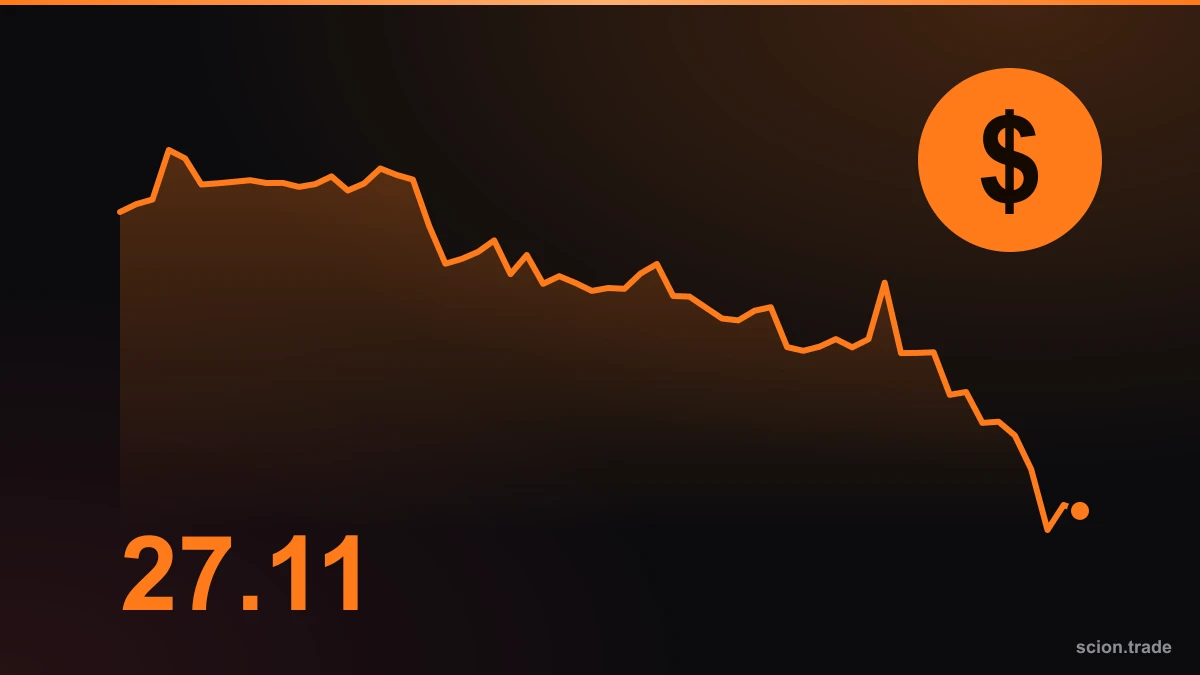
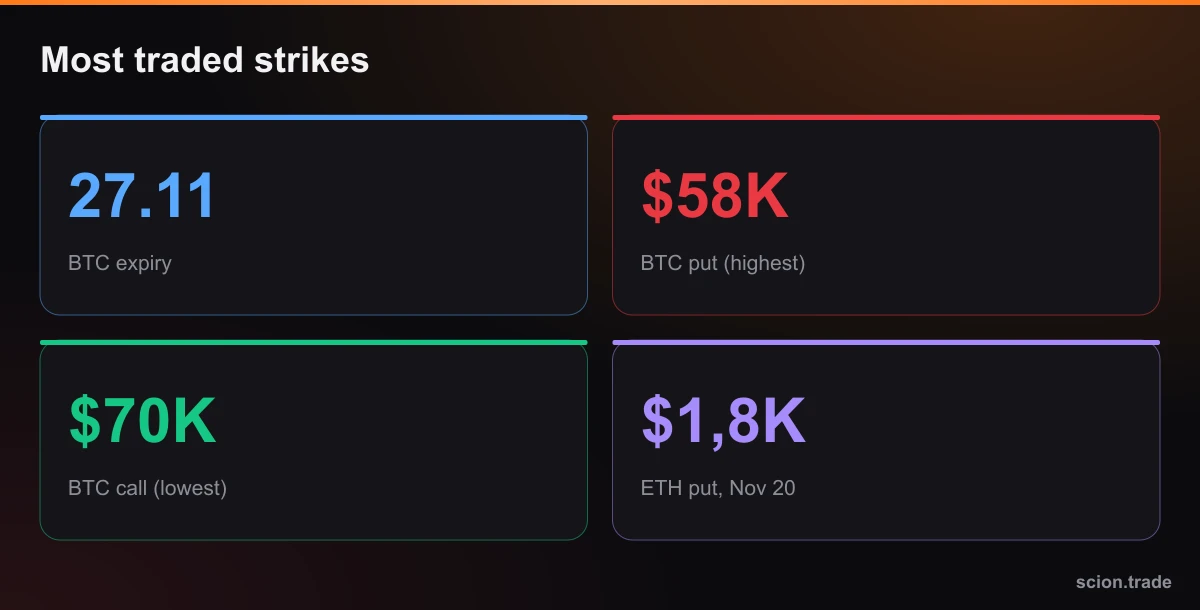
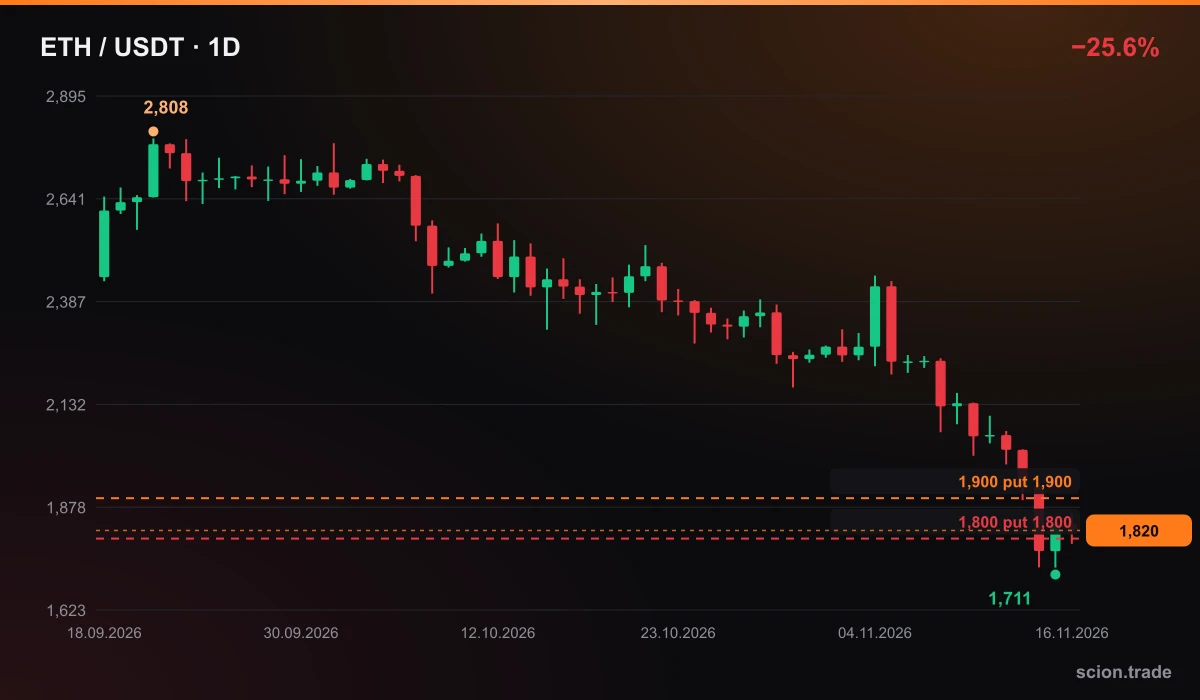
Besides futures and funding, crypto has another tool: options. According to CoinDesk, the most traded BTC options expire on Nov 27: puts at $50,000, $52,000 and $58,000 strikes and calls at $70,000, $86,000 and $87,000. For ETH, the most traded were the Nov 20 puts at $1,800 and $1,900.
What is an option?
An option gives the buyer the right (not the obligation) to buy or sell at a set price (the strike) until a set date. The buyer pays a premium for it.
- Call: the right to buy at the strike. Gains when price rises.
- Put: the right to sell at the strike. Gains when price falls; often bought as "insurance".
- Expiry: the last date the option is valid.
The buyer's maximum loss is the premium paid; there is no liquidation as in futures.
Reading options as a market signal
- Puts pricier than calls. Per CoinDesk, implied volatility eased but puts are still pricier than calls. That means the market is paying more for downside protection.
- Strike clusters. Interest in the $58,000 and $50,000 puts is high; those are zones traders watch with caution.
- Max pain and hedging: near expiry, market-maker hedging can influence price; treat it as context, not an exact forecast.
ETH and Nov 20
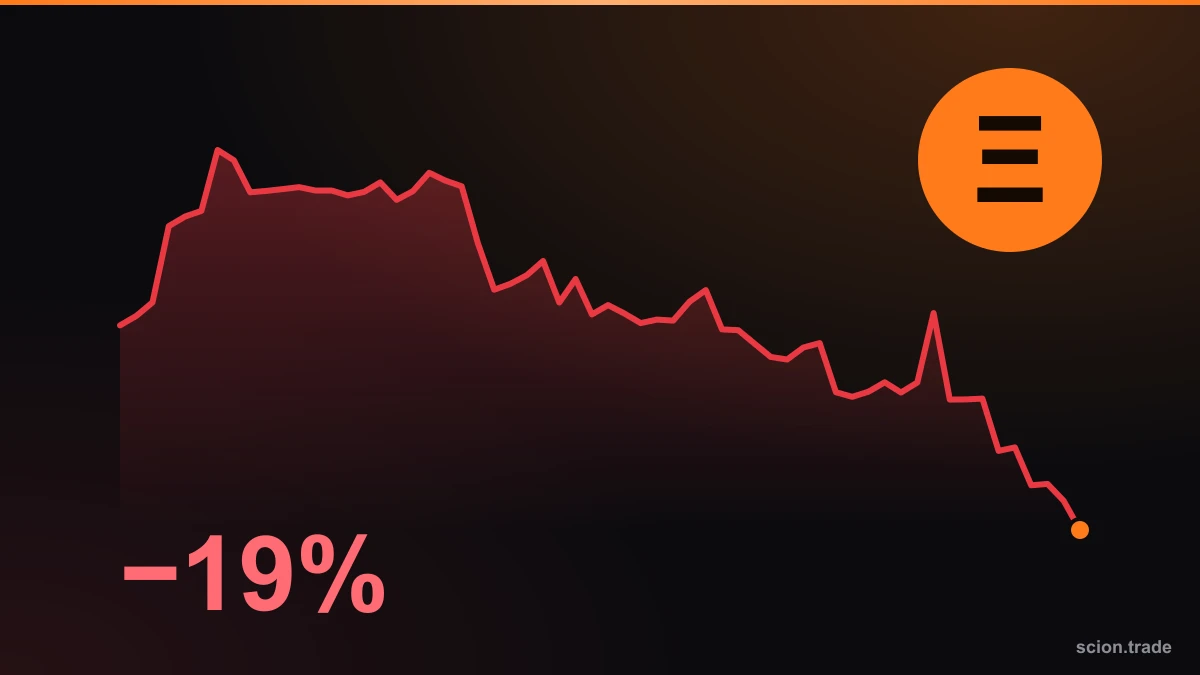
ETH is now around $1,800 (OKX), right next to the most traded $1,800 and $1,900 put strikes. As expiry nears, price around these levels can get choppier because of hedging flows.
Rules for beginners
- An option buyer's loss is limited to the premium, but the seller's risk can be huge: selling is not for beginners.
- Premium decays quickly as expiry approaches (theta).
- Option price depends on implied volatility: it gets pricier when volatility rises.
- Understand plain calls and puts before complex strategies.
- In futures, manage risk with the liquidation calculator and the position calculator.
Sources: CoinDesk, price and chart: OKX API.
This material is for educational purposes only and is not investment advice.