Urgent: US names MEXC a "primary money laundering concern"; Binance and OKX restrict transfers
FinCEN has named MEXC a primary money laundering concern. The order takes effect on 10 December 2026, and Binance no longer accepts transfers to or from MEXC. What happened, who is affected, and what to do if your funds are on MEXC.
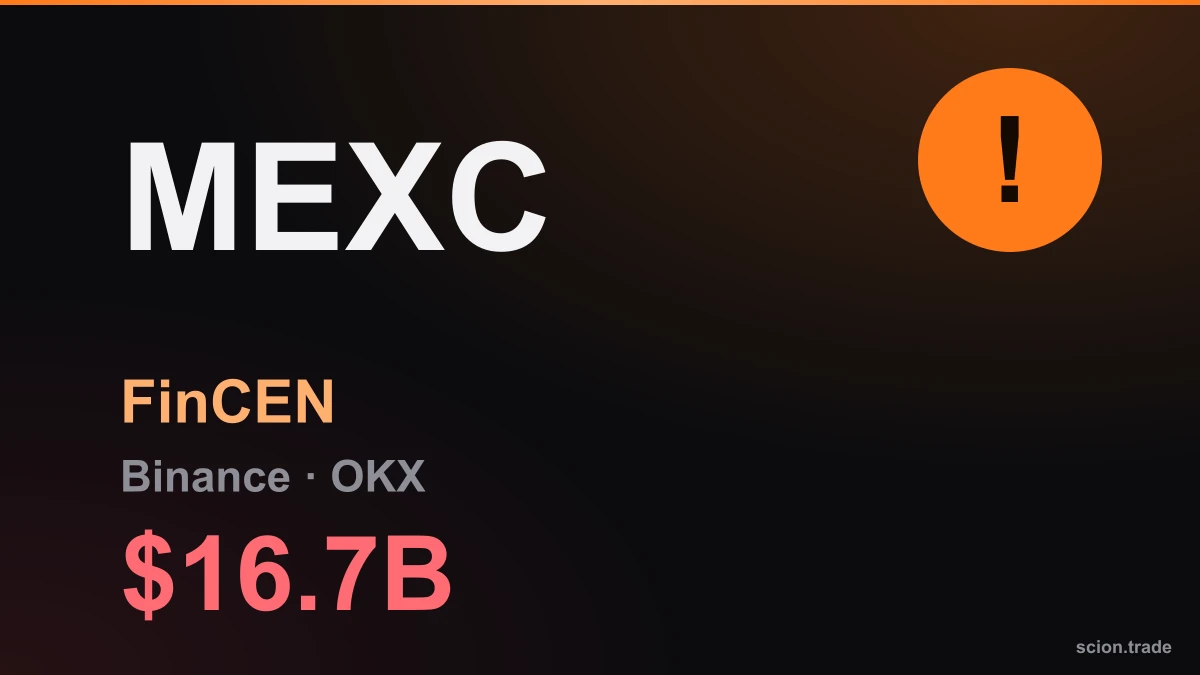
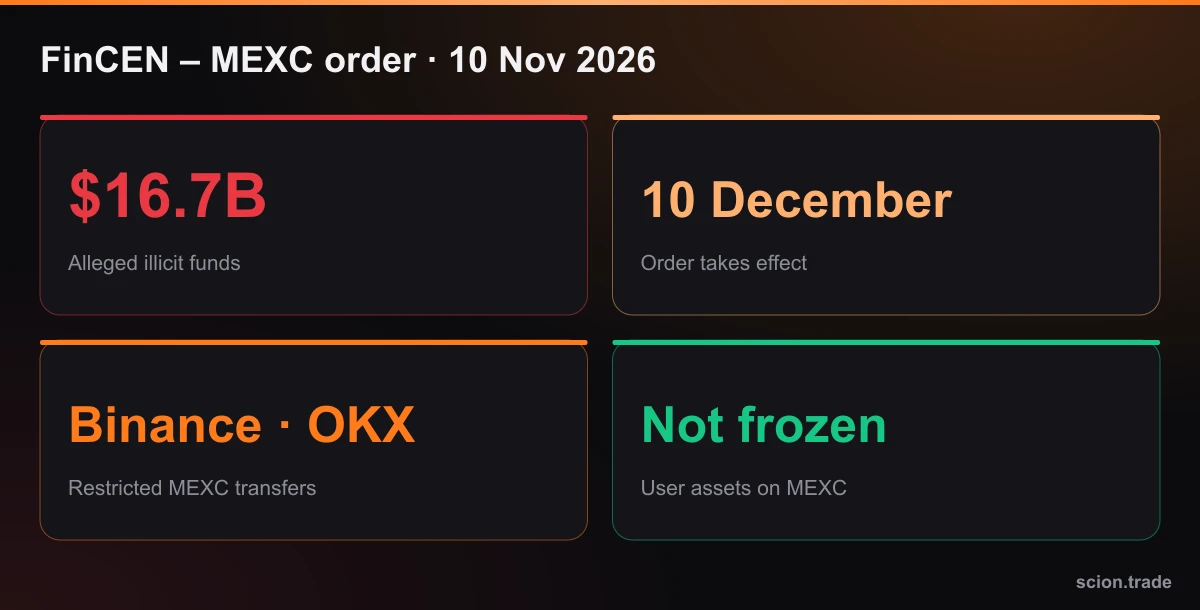
The US Treasury's Financial Crimes Enforcement Network (FinCEN) has named MEXC, one of the world's largest crypto exchanges, a "primary money laundering concern". The order was published in the US Federal Register on 10 November 2026 and takes effect on 10 December 2026. Binance and OKX did not wait for that date and have already started restricting MEXC-related transfers.
What happened?
FinCEN acted under the Combating Russian Money Laundering Act. This is a regulatory measure, not a court ruling. US financial institutions are prohibited from any transmittal of funds to or from MEXC, including cryptocurrency.
The order covers the corporate group, not just the MEXC brand: MEXC Global Ltd and MX Global Ltd (Seychelles), MEXC Estonia OÜ (Estonia), GIDA Technology AG (Switzerland), MXC Global Ltd (UK) and former entities in Singapore.
What does FinCEN allege?
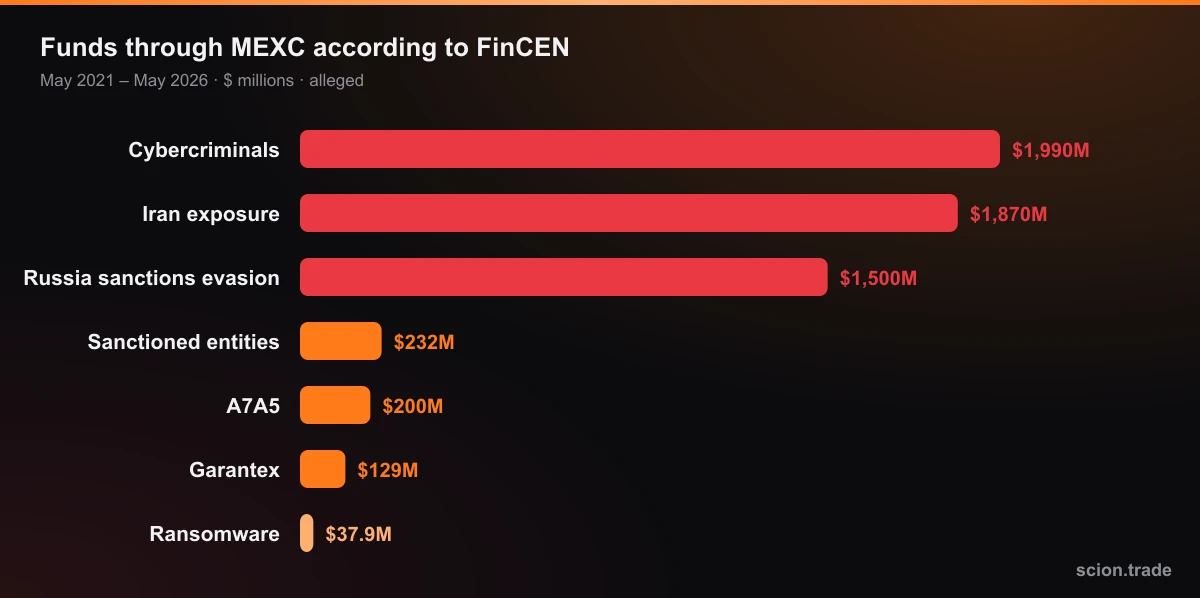
According to FinCEN, around $16.7 billion linked to illicit activity moved through MEXC between May 2021 and May 2026, and its anti-money-laundering controls have "severe deficiencies". Key allegations:
- about $1.5 billion linked to Russian sanctions evasion
- transactions with the sanctioned Russian exchanges Garantex (~$129 million) and Grinex (~$4.1 million), reportedly continuing until June 2026
- about $1.87 billion of exposure to Iran
- at least $1.99 billion from cybercriminals
- $232 million in direct transactions with entities on US, EU or UK sanctions lists
These are FinCEN's allegations; there is no court ruling against MEXC.
What did Binance and OKX do?
- Binance told users not to transact with MEXC and its affiliates through Binance, directly or indirectly. Requests to send funds from Binance to MEXC are declined. Deposits from MEXC are temporarily withheld for a compliance review, which may lead to account restrictions or even offboarding.
- OKX has also begun holding deposits from MEXC for review.
- Some users report delays and extra checks on transfers from MEXC at other exchanges such as Gate.
What does MEXC say?
In a statement on 7 November, MEXC said it is reviewing the order with its legal and compliance teams, that user assets are not frozen and that trading continues normally. The company said it will engage with FinCEN and has started an independent review of its controls. According to press reports, hundreds of millions of dollars left the exchange in the days after the announcement.
What should you do if your funds are on MEXC?
- Don't panic, but don't ignore the risk. The order doesn't freeze assets, but after 10 December moving money between MEXC, banks and major exchanges may become even harder.
- Don't withdraw from MEXC directly to Binance or OKX. These transfers are being held and could get your Binance account restricted.
- Use your own wallet. If you withdraw, send funds to a wallet you control first, and check the destination exchange's current rules before sending.
- Don't try to get around the rules with intermediate wallets. Exchanges trace the source of funds with on-chain analysis, and such attempts can get your account closed.
- Keep records. Save your trade and withdrawal history in case an exchange asks where your funds came from.
- Don't rely on a single exchange. This case shows again the risk of keeping everything on one platform. For long-term savings, a self-custody wallet is safer.
As an alternative, you can read about Scion DEX on our site, where you trade while keeping your assets in your own wallet: the funds stay with you, not on an exchange.
Sources: US Federal Register, document 2026-22962; Decrypt; Bitcoin Magazine; CryptoSlate; Binance's notice to users.
This material is for educational purposes only and is not investment advice.