What is correlation? How Bitcoin and the Nasdaq moved together over 90 days
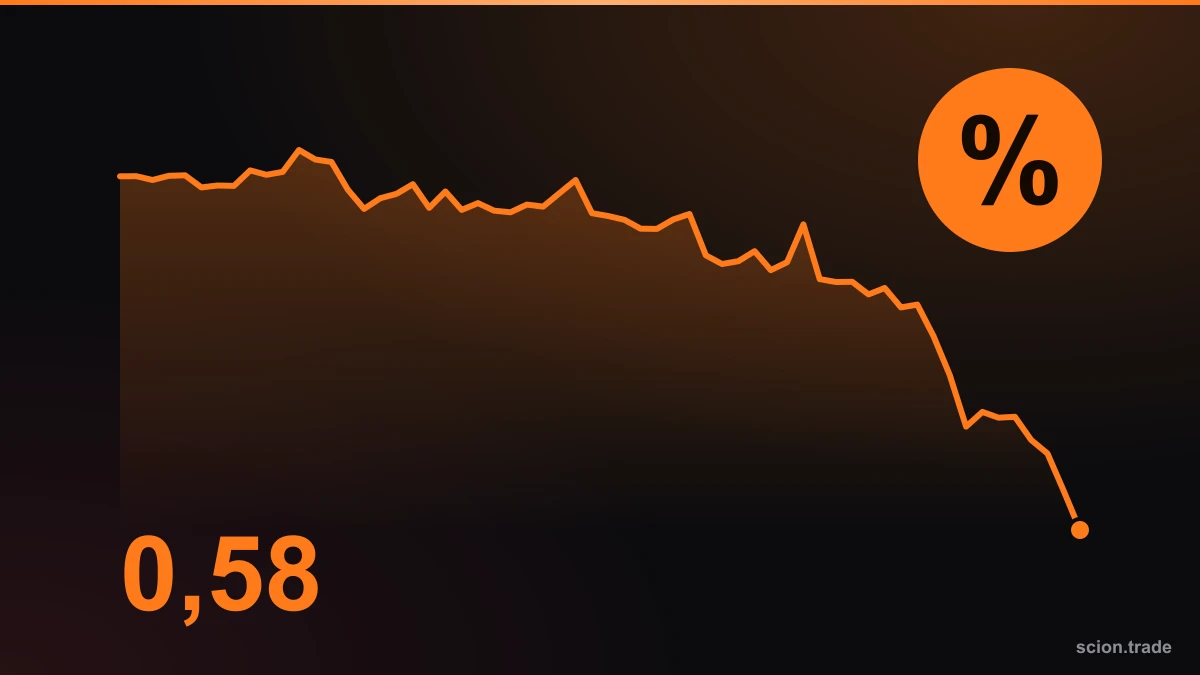
BTC and the Nasdaq 100 had a correlation of about 0.58 over the last 89 days. How to read correlation and apply it to risk.
Correlation measures how closely the daily returns of two assets move together. It ranges from −1 to +1: +1 means the same direction every time, 0 means no relationship, −1 means exactly opposite. This week's selloff illustrates it well.
Today's numbers
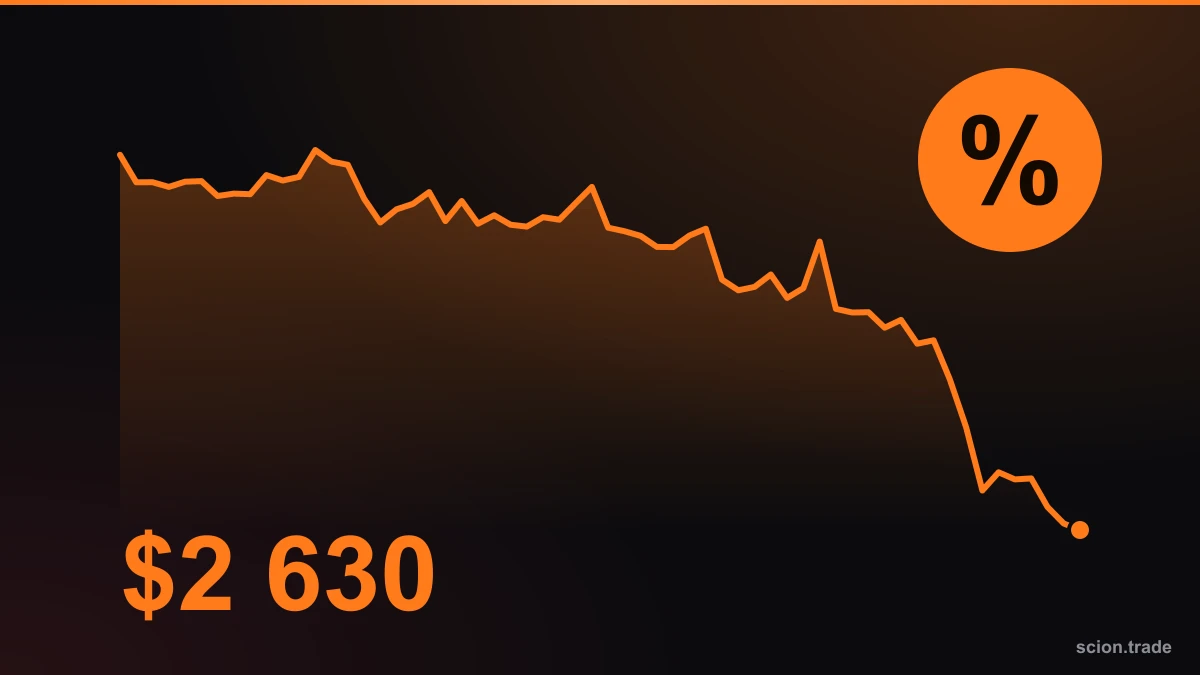
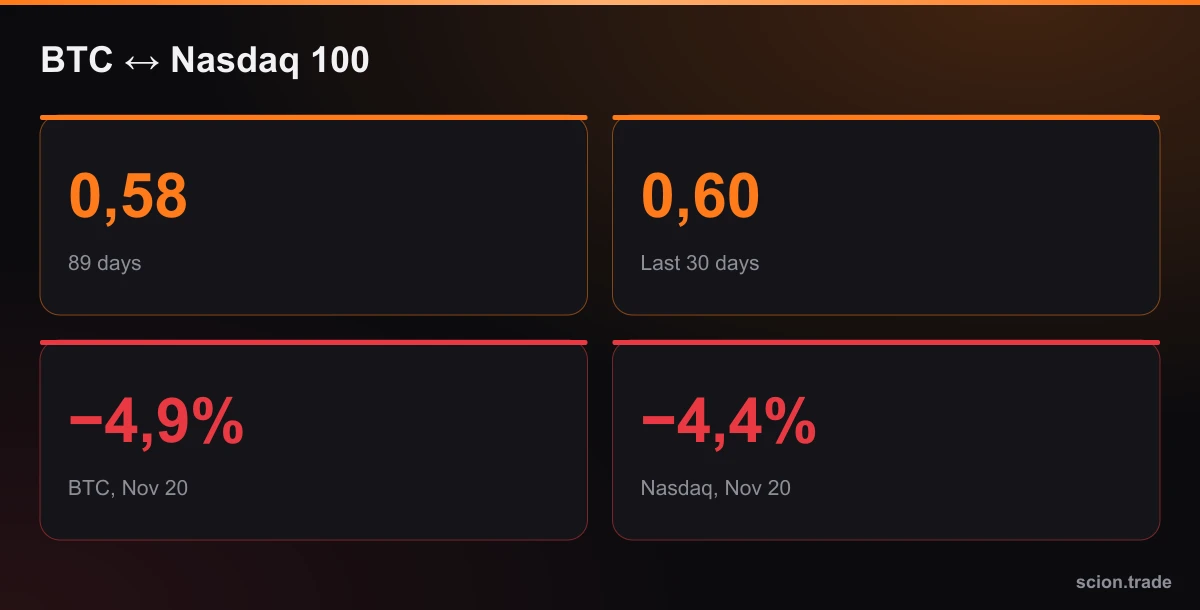
We took daily closes for BTC/USDT from OKX and for the Nasdaq 100 perpetual (PERP_NAS100_USDC) from Orderly and computed the correlation of daily percentage changes over the last 89 days:
- Last 89 days: about 0.58
- Last 30 days: about 0.60
- Oldest 30 days: about 0.67
That is a moderately strong positive relationship. Note: the Orderly perpetual trades on weekends while the regular index does not, so the calculation is approximate and can differ by data source.
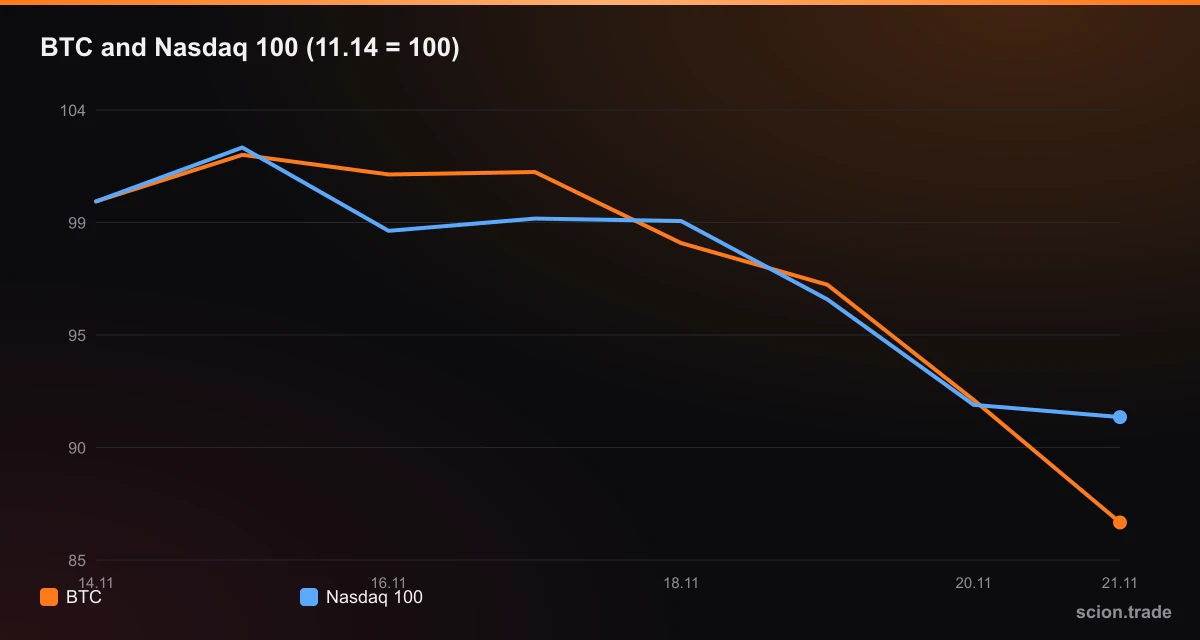
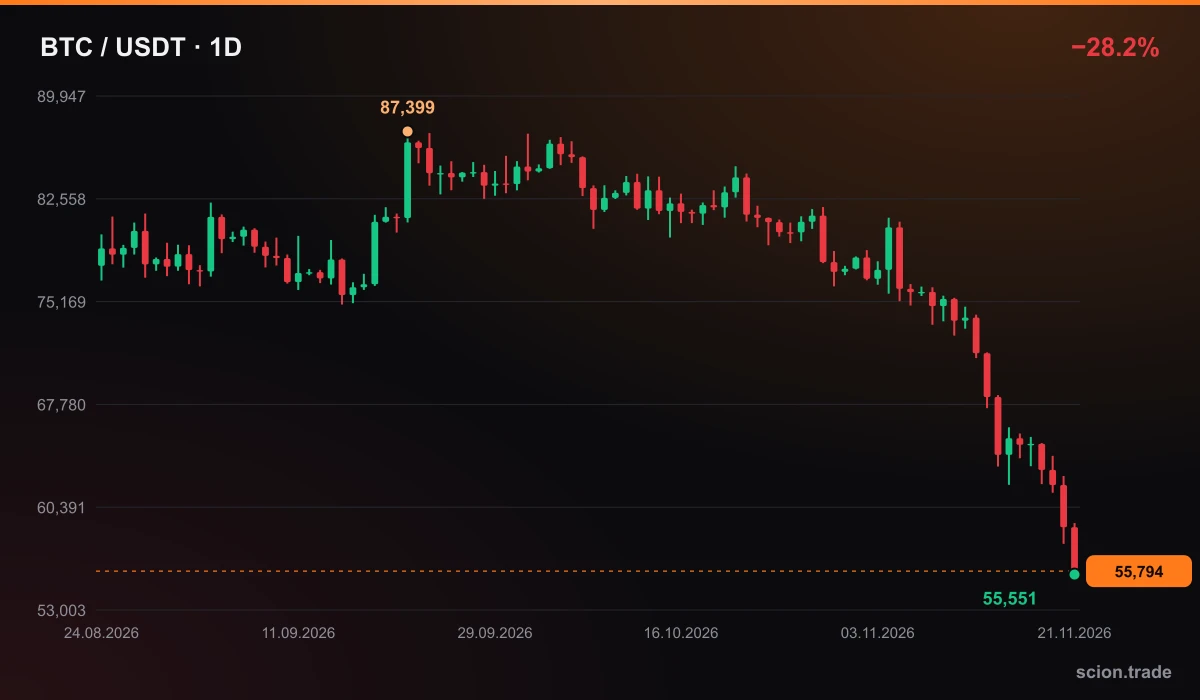
During the stock selloff on November 20 (see our separate article), BTC closed about −4.9% and the Nasdaq 100 perpetual about −4.4%. On November 21, BTC fell another −5.4% while the Nasdaq perpetual moved only about −0.6%: correlation is not constant.
How to read correlation
- Below 0.3: weak relationship.
- 0.3–0.7: moderate; assets often move the same way, but not always.
- Above 0.7: strong relationship.
- Negative: assets move in opposite directions (for example, sometimes the dollar index and gold).
Why it matters for risk management
If you hold BTC, ETH and Nasdaq 100 positions, they may look like three separate positions but can move together under stress. That means real risk is larger than it looks. In crises, correlation typically rises: investors leave all risk assets at once.
Practical notes
- Add up the risk of correlated positions in the same direction; use the position-size calculator.
- Correlation is historical and changes; it guarantees nothing about the future.
- Look at different windows (30, 90 days); don't rely on one number.
Sources: OKX, Orderly, scion.trade/markets.
This material is for educational purposes only and is not investment advice.