Spot vs perpetual futures: what is the difference?
Ownership, leverage, liquidation and funding: how spot and perpetual trading differ, with the last 7 days of BTC funding.
You can trade the same BTC price in two ways: on the spot market you buy the coin itself; with a perpetual future ("perp") you only hold a contract on the price direction. Knowing the difference means knowing where your risk comes from.
The main differences
- Ownership: on spot the coin is yours and can be withdrawn to a wallet; with a perp you only hold a contract.
- Leverage and shorting: perps offer leverage and a way to profit from falls; spot does not.
- Liquidation: on spot, a 50% drop still leaves you the coin. With a leveraged perp a much smaller move can close the position.
- Funding: to keep the perp price close to spot, longs and shorts pay each other regularly.
How funding works
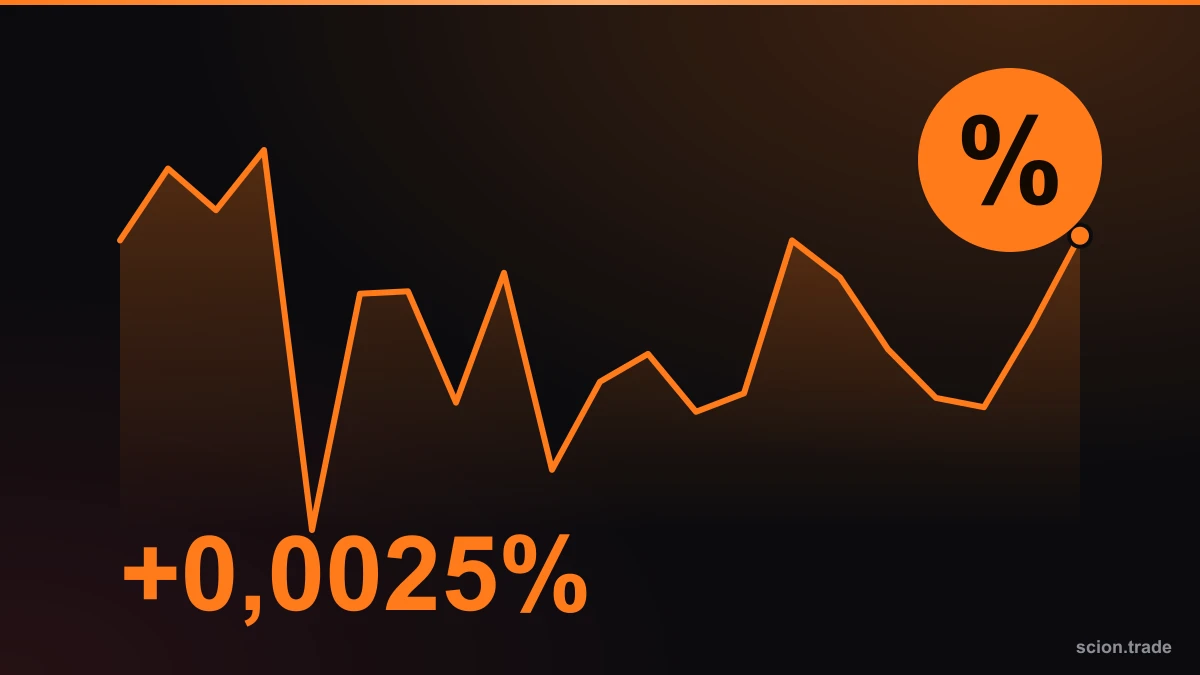
If the perp trades above spot, funding is positive: longs pay shorts. Below spot it is negative: shorts pay longs. On the OKX BTC-USDT perp the payment happens every 8 hours.
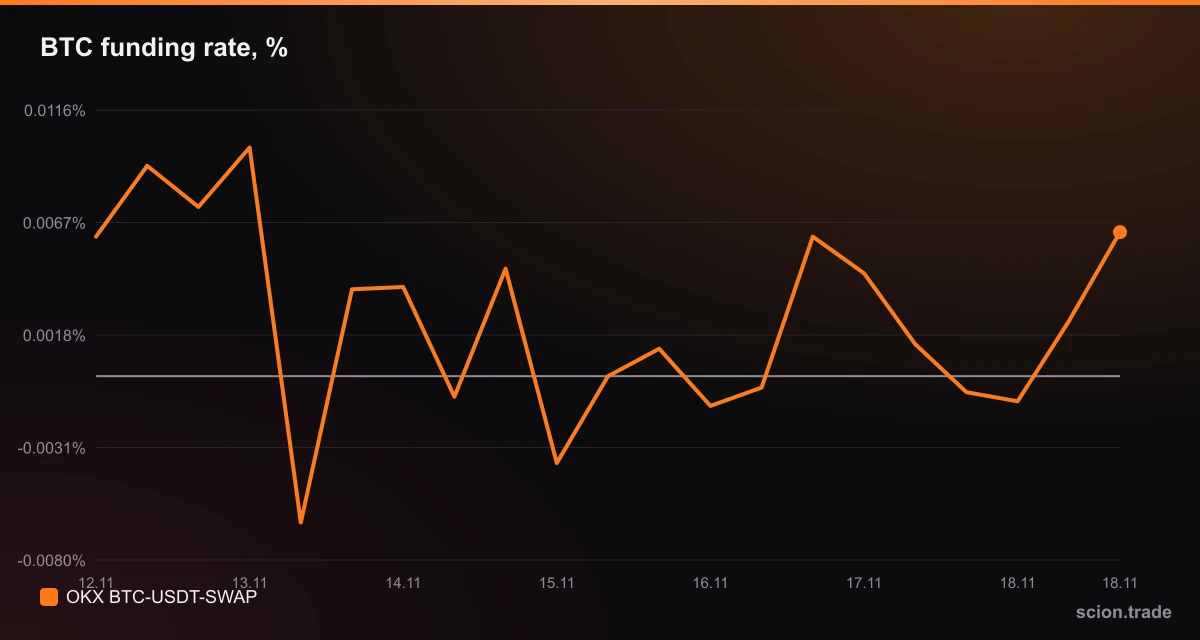
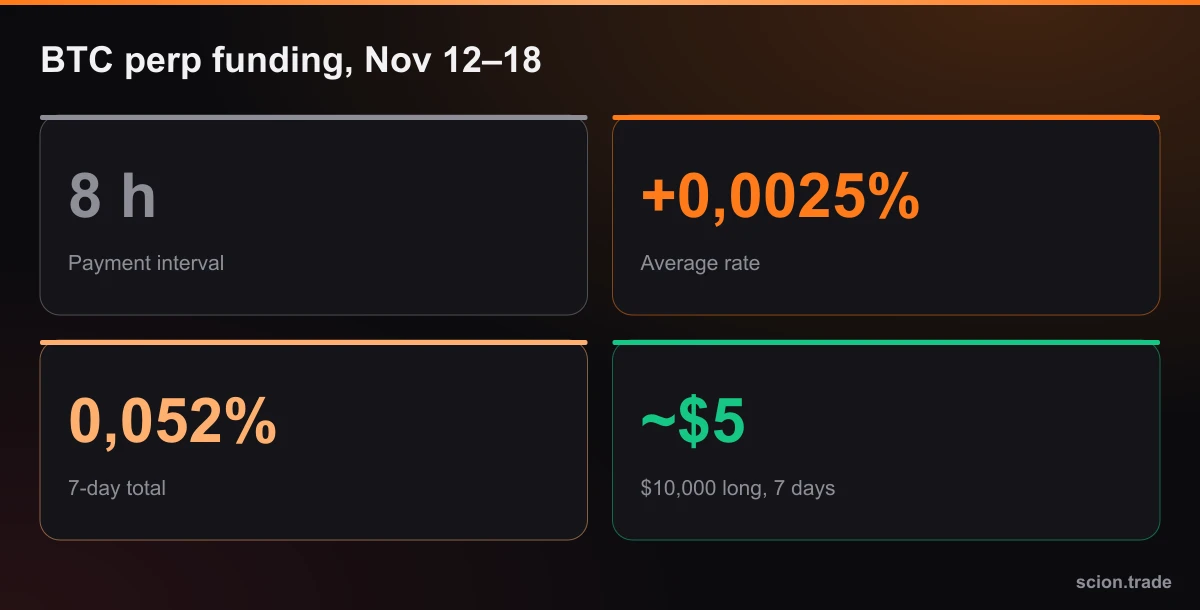
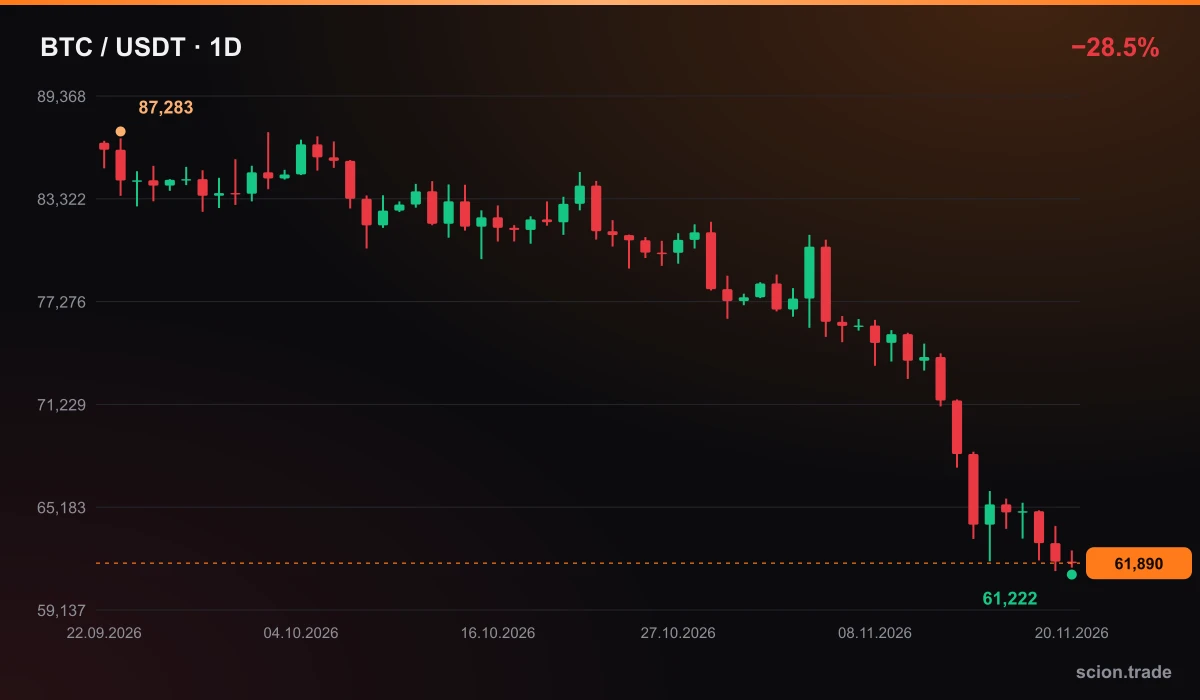
According to OKX, across the 21 payments from November 12 to 18 the rate ranged from −0.0064% to +0.0100%, averaging +0.0025%. The total was about 0.052%: a $10,000 long paid roughly $5 in a week. Despite the sharp drop, demand for leveraged longs was not excessive and the market stayed balanced.
Which suits whom?
- Long-term accumulation: spot. No liquidation, no funding.
- Short-term trading, hedging, shorting: perps. Keep leverage low and always know your liquidation price.
- Holding a perp for long: funding adds up; when it is positive, carrying a long gets more expensive (funding and OI).
Source: OKX BTC-USDT-SWAP realized funding rates (November 12–18, 2026).
This material is for educational purposes only and is not investment advice.